


From Tree to Table: The Incredible Journey of Kerala Raw Cinnamon
- 3 days ago
- 3 min read
Kerala raw cinnamon is prized worldwide for its rich aroma and unique flavor. But few know the detailed journey this spice takes from the trees in Kerala’s lush forests to the spice racks in kitchens around the globe. This post uncovers the fascinating process behind every cinnamon stick, revealing the care and craftsmanship involved at each step.

Harvesting Cinnamon Bark
The journey begins in the dense, humid forests of Kerala, where cinnamon trees thrive. These trees belong to the genus Cinnamomum, and the variety grown here is known for its thin, fragrant bark. Harvesting happens during the rainy season when the bark is moist and easier to remove.
Skilled harvesters carefully cut the outer bark to expose the inner bark, which is the valuable part. They then peel this inner bark in long strips. This step requires precision to avoid damaging the tree and to ensure the bark remains intact. The bark strips curl naturally as they dry, forming the familiar cinnamon quills.
Drying and Curing
Once peeled, the cinnamon bark undergoes a drying process. The strips are laid out in the sun on mats or racks, where they dry slowly over several days. This drying reduces moisture content and intensifies the bark’s flavor and aroma.
During drying, the bark curls tighter and changes color from pale yellow to a rich reddish-brown. This natural curing process is crucial for developing the cinnamon’s signature taste. Farmers monitor the drying carefully to prevent mold or over-drying, which can reduce quality.
Sorting and Grading
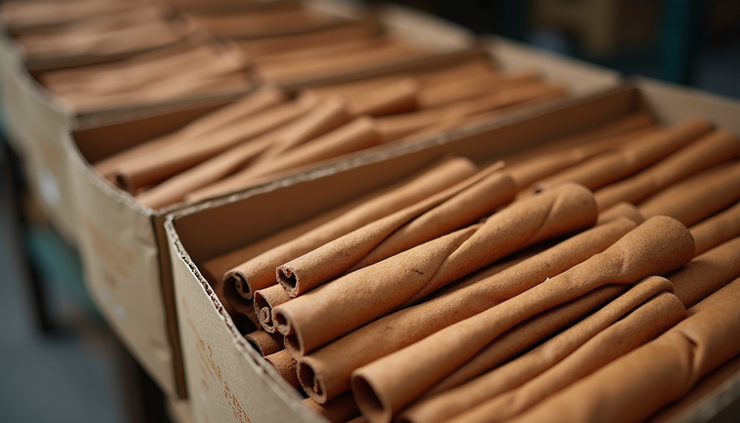
After drying, the cinnamon quills are sorted by size, thickness, and color. Kerala raw cinnamon is often graded into categories such as “Alba,” “Continental,” and “Mexican,” based on these characteristics. Higher grades have thinner, more uniform quills with a stronger aroma.
Sorting is mostly done by hand, with experienced workers selecting the best pieces for export or local markets. Lower-grade bark may be ground into powder or used for essential oil extraction.

Packaging and Quality Control
Once sorted, the cinnamon quills are bundled and packaged. Packaging protects the cinnamon from moisture and contamination during transport. Many producers use airtight bags or boxes lined with moisture-absorbing materials.
Quality control teams inspect the cinnamon for purity, aroma, and absence of foreign matter. Some batches undergo laboratory testing to check for pesticide residues or contaminants, ensuring the cinnamon meets international food safety standards.
Distribution to Markets
From Kerala, the packaged cinnamon travels to spice markets, wholesalers, and exporters. It may be shipped by sea or air, depending on the destination and urgency. Exporters often provide traceability information, allowing buyers to know the cinnamon’s origin and processing details.
In global markets, Kerala raw cinnamon is prized for its authentic flavor and quality. It reaches supermarkets, specialty spice shops, and food manufacturers who use it in products ranging from baked goods to beverages.
Bringing Kerala Cinnamon to Your Table
When you sprinkle cinnamon on your morning oatmeal or add it to a recipe, you enjoy the result of a long, careful process. The journey from tree to table involves nature’s bounty, skilled hands, and strict quality checks. Kerala raw cinnamon’s unique flavor reflects this dedication.
Next time you use cinnamon, consider the farmers and workers who nurture the trees, harvest the bark, and prepare it for your kitchen. Their work preserves a centuries-old tradition and brings a piece of Kerala’s rich heritage to your home.
Explore local spice shops or trusted online sellers to find authentic Kerala raw cinnamon. Using genuine cinnamon enhances your dishes and supports sustainable farming communities.
This journey shows how a simple spice connects forests, farmers, and food lovers worldwide. By understanding the process, you can appreciate the value behind every cinnamon stick and enjoy it with greater awareness.


Comments